The Specific Type Of Empathy That Is Highly Beneficial In The Workplace

When people talk about the role of empathy in innovation, they usually mean using empathy as a means of discovering problems that are worth solving. The entire field of design thinking is predicated on using empathy as the first step to uncover problems another person is facing. By putting yourself in another’s shoes, one can more accurately determine what they might be going through in a particular situation which in turn helps in devising new solutions. 

Empathy is indeed one of many routes for creative ideas, but the connection between empathy and innovation is much more intertwined than simply being a trigger for discovering problems. 

What Is Empathy?

Empathy is described as “a complex psychological response in which observation, memory, knowledge, and reasoning are combined to yield insights into the thoughts and feelings of others.” In the empathetic state, there may be some temporary identification with the other, but at no point is there any confusion between the self and the other.

Research indicates that there are two empathy mechanisms – a basic emotional system and a more advanced cognitive perspective-taking system. These two systems use different neural pathways and can get triggered in parallel. Emotional empathy is when you instantly feel the same emotions that the other person is feeling even when you don’t know their whole story, and one theory attributes this to the presence of mirror neurons in our brain. For example, seeing strong emotions like fear or distress on another person’s face can instantly create the same emotion inside us. Cognitive empathy, on the other hand, is about taking the other person’s perspective in order to determine how they might be thinking and feeling in a situation. It is based on conscious reasoning and while emotions are still generated, they are more controlled. 

As an example, say one of your employees shares a stressful family situation. With emotional empathy, you detect his stress and immediately experience the same emotion. This sudden burst of emotions might cause you to relive a time when you went through a similar situation which in turn further amplifies those feelings. In the cognitive empathy case, cognition takes the lead and you focus on understanding your employee’s perspective. You actively try to recall a similar situation you faced before along with its associated challenges, which gives you insights on what your employee might be worried about even when those aspects are not verbalized. 

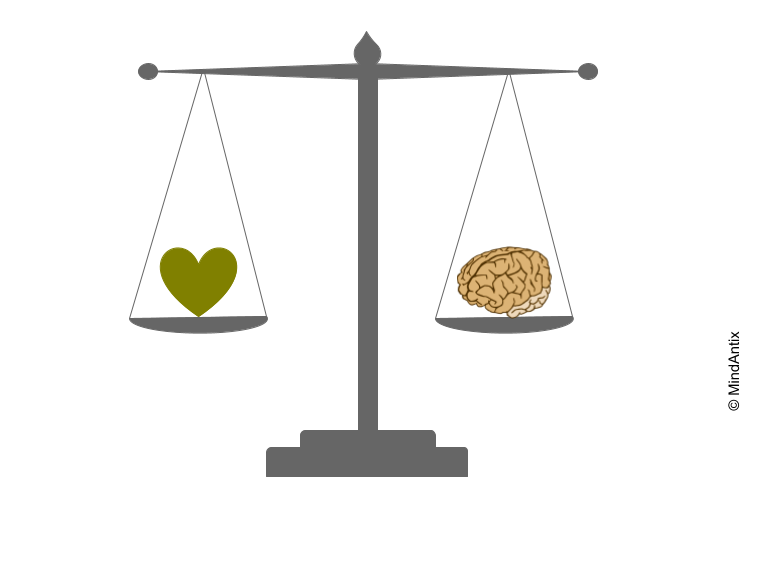
One way to distinguish between the two types of empathy is that emotional empathy is about “I feel what you feel” while cognitive empathy is about “I understand what you are thinking.” And it turns out that of the two, cognitive empathy has some surprising benefits in the workplace. 

How Cognitive Empathy Improves Innovation and Decision Making

One of the immediate benefits of cognitive empathy is that it puts one in a problem solving mode and allows one to come up with more novel solutions. With emotional empathy on the other hand, the cocktail of emotions often makes it harder to focus on finding solutions. 

The reason cognitive empathy is so effective is that it relies on perspective taking, which also happens to be a key mechanism for creative thinking. In perspective taking, one has to temporarily drop their own way of thinking (which reduces self-bias), and instead pay attention to the other person’s point of view. Integrating multiple perspectives leads to new insights about the problem as well as novel ways in addressing them. 

Perspective taking also underlies good listening skills because the ability to analyze and integrate a conflicting mental model from another demonstrates to them in a very concrete way that their ideas have value. For similar reasons, cognitive empathy shows superior results when it comes to negotiating. In a series of experiments involving MBA students, researchers found that perspective-takers were able to uncover underlying interests and generate more creative solutions with greater collective and individual games than emotional empathizers.  The authors summarized, “that in mixed-motive interactions, it is better to ‘‘think for’’ than to ‘‘feel for’’ one’s adversaries—more beneficial to get inside their heads than to have them inside one’s own heart.”

The benefit of practicing cognitive empathy extends well beyond isolated incidents – adopting perspective taking as a habit allows innovative ideas to emerge from routine discussions. As people become more cognitively empathetic, the overall creativity and innovation levels of an organization increases. Empathetic leaders play a crucial role in the process of building organizational innovation. A recent study found that people with highly empathetic senior leaders were 4.7x more likely to report being innovative at work compared to people with less empathetic senior leaders.

How To Build Cognitive Empathy

A more recent model of empathy based on brain lesions suggests that the two empathic systems are independent and are simultaneously triggered. Using cognitive empathy in any situation therefore requires striking the right balance between emotions and problem solving. Here are three things to keep in mind for cognitive empathy:

  • Concern For Others: The first step towards cognitive empathy starts with a genuine concern for others. Without this, any attempt to demonstrate empathy will come across as inauthentic. Having a prosocial motivation has been shown to encourage perspective taking and enhance overall creativity of solutions.
  • Maintain Self Awareness: A key challenge in perspective taking is the egocentric bias. We see others through our own beliefs and knowledge, making it hard to fully understand their perspective. A degree of self awareness can help overcome the egocentric bias by deliberately suppressing our own mental models. Self awareness is also useful in regulating emotions and keeping the focus on problem solving. 
  • Build Perspective: Finally, the goal of cognitive empathy is to understand the other’s perspective in order to find effective solutions. The easiest situation to relate to is one where you have had a similar experience but if that doesn’t apply, then several other cognitive techniques can help. You could use abstraction to find a situation that uses the core emotion (e.g. anxiety but in a different scenario), use counterfactual thinking (“what if..”) to imagine how you would feel in a similar situation or use associative thinking to piece together different experiences into a new scenario. Consciously constructing a relevant scenario can then give insights on what the other person is dealing with and how to improve the situation. The same cognitive techniques that help build perspective are also core to creative thinking so practicing cognitive empathy regularly increases cognitive flexibility and problem solving skills.

Conclusion

Cognitive empathy is the mental capacity to take another person’s perspective where the goal is not to experience the other person’s mental state but to understand it better. That understanding allows one to gain insights into aspects that people may not be verbalizing. Cognitive empathy is not just useful in a specific situation –  it increases mental flexibility and problem solving skills more generally. The more people practice cognitive empathy in an organization, the more they become better at creativity due to shared cognitive mechanisms. 

This is not to say that emotional empathy has no value. Being able to pick up and reflect others emotions helps in relationship building and is likely more valuable in the long-term than in the short-term. However, as the nature of work shifts more towards hybrid and remote where it’s not always possible to pick up on nonverbal cues that trigger mirror neurons, the role of cognitive empathy becomes much more important. 

By consciously incorporating cognitive empathy, organizations can become both kinder and smarter. 

The Most Important Element For Being A Good Listener

Being a good listener is essential to communication and active listening is increasingly considered to be a vital leadership skill. A quick internet search on how to be a good listener serves up countless articles with similar advice – giving your full attention to the speaker, repeating back what the speaker says or asking lots of questions. While these tips are useful to some extent, they don’t really address the most crucial aspect of listening. They place more importance on how to look like a good listener as opposed to being one, and miss the essence of listening. 

Real listening is a cognitive skill.

A Model Based Approach To Listening

To understand why listening has a strong cognitive component, let’s consider a scenario that can make or break your image as a good listener – when people disagree with you. This kind of situation plays out quite frequently in the workplace. One person thinks that feature A (or task A) is more important to address while their colleague thinks that feature B (task B) is more important. 

Most people approach a disagreement with the mindset that they need to “win” the debate and focus on vigorously defending their idea. But this is the wrong attitude to start with and a better approach is to think in terms of mental models. 

Assuming that there are no strong biases at play, one reason two rational people might disagree is that they have two different mental models of how the (small slice of) world works. Different mental models are a reflection of the fact that different people bring different knowledge and experiences with them that has shaped their thinking.  

Viewed from that lens, active listening is a problem solving exercise in reconciling the different mental models. There are only two possible outcomes – one person has a better model which leads to the other updating their mental model, or both people have an incomplete picture which leads them to co-creating a better, more holistic model. For successful listening to take place, at least one mental model has to be updated. 

How To Listen Thoughtfully

The key to better listening is to focus on the cognitive aspect of listening as your main goal. Here are three things to keep in mind as you engage in active listening:

  • Start With A Problem Solving Mindset: If someone comes to you with a viewpoint that is different from yours, start with the assumption that their viewpoint is valid based on their knowledge or prior experience. In most cases, we jump into the dialogue in a critiquing mode, trying to find holes in the other person’s thought process in order to “win” the point. Instead, reframe the discussion as a puzzle where multiple perspectives need to be rationalized and synthesized into a more complete model.
  • Explore Mental Models: Ask questions to understand each other’s mental models and explore their boundaries. Are there specific scenarios where one model is a better representative? As a leader, it’s tempting to feel that you have a better understanding of the problem and thereby miss questioning your own assumptions. While this might be true for simpler issues, for more complex problems you can safely assume that both people have an incomplete picture. 
  • Don’t Rush To Finish: Synthesizing different perspectives is a cognitively demanding task and for complex problems the right solution may not emerge in one discussion. Some of the most creative ideas come when you take a break after thinking intensely about a problem. So become more comfortable with deferring the decision to allow for more bake time. 

One Simple Question To Ask Yourself

If you have been diligently following rules of thumb for good listening and wondering why your team still doesn’t think of you as a good listener, it’s time to recognize that performative listening doesn’t work. Blindly following “listening rules” make interactions seem contrived and fast tracks you to losing trust with your team. 

Instead, focus on the cognitive aspect of listening and allow other behaviors to flow naturally from that. When people are genuinely trying to understand, they ask more relevant questions that can reconcile different viewpoints and increase collective intelligence. They come across as authentic because they are not asking (any) questions just to appear interested. Similarly, understanding different perspectives and integrating them into your mental models is a cognitively demanding process. As a result, good listeners tend to talk less because they are doing more complex information processing internally, not because they are following a rule in order to appear interested. 

If you are not sure whether a discussion went well or not when it comes to active listening, ask yourself one question – did your mental model change? 

For a productive conversation, at least one person’s mental model needs to change and in the ideal scenario, both parties get an “aha” moment that adds to their understanding. With the model based approach, listening and learning become indistinguishable. 

Nothing makes someone feel like they were heard more than having their idea be a clear part of the solution. But achieving that is not easy in the workplace due to poor listening habits. The main problem with the prevalent guidance on listening is that it focuses on how good listening looks on the outside, and not on what is happening inside where the real work gets done. It misleads people into believing that simply following these rules of thumb will make them a better listener. By adopting a more problem solving mindset where you actively try to understand and integrate each other’s mental models is a more constructive and effective approach to listening. 

Harnessing Group Intelligence For Innovation Productivity

Edward DeBono argued three decades ago that creativity is the most important human resource of all, and it’s truer now than ever. Without a strong culture of innovation that harnesses employee creativity effectively, organizations are much more likely to fail in the modern economy.  

But capturing employee creativity towards organizational innovation is challenging. Our current management practices evolved from Fordist (and Taylor’s scientific management even earlier) approaches to measuring productivity that served well for linear, predictable systems. For example, if a production line produces X widgets/week, you could be sure that by adding another production line you can get 2X widgets/week. Unfortunately, applying these approaches to innovation doesn’t work for two reasons:

  • Creativity is fundamentally non-linear. During brainstorming two people with individually weak ideas might discover key insights that lead to a billion dollar one. Or, an individual could be wrestling with a challenging problem for several days with very little to show for it and then suddenly find an interesting solution in a day. 
  • Complex problems often require a group to collaborate in order to find efficient solutions. But simply bringing people is not enough. Depending on the group and how individuals interact, you could get collective intelligence or collective stupidity. Most incentives are aligned with individual performance and backfire when work is highly dependent on group performance. 

So instead of focusing on linear metrics like bugs fixed per week or number of features shipped, we need better mechanisms that allow for collective intelligence to flourish. 

Swarm Intelligence

Some of the most fascinating examples of complex problem solving in groups come from nature. Groups of ants, bees, birds and other creatures can solve surprisingly complex problems easily even though each individual in the swarm is only following simple rules. Intelligent behavior emerges from these simple interactions. For example, army ants can travel for long distances without traffic jams in dense three lane highways by following simple rules like outgoing ants turn aside when they encounter incoming ants. 

Collective intelligence works surprisingly well in many kinds of problems like estimation or prediction. One of the most well known examples comes from Francis Galton, a pioneering statistician and half-cousin of Charles Darwin, who asked people to guess the weight of an ox at a fair in 1906. While individual responses varied from 1,074 to 1,293 lbs, the mean came to 1,197 lbs closest to the true value of 1,198 lbs! 

Group intelligence also outperforms individual intelligence in much more complex situations like hiring the right candidate for a role. Google at one point had a fairly complex hiring process where candidates could face up to 25 interviews. After analyzing data on interview performance and subsequent job performance, they were able to simplify the process down to 4 interviews which gave them an 86% confidence level. The interesting thing that came out of their analysis was that none of their managers – regardless of the years of experience under their belt –  were individually good at predicting who would make a good employee. The wisdom of the group of four always outperformed individual prediction! 

Research from several domains shows that for groups to work intelligently, few key conditions need to be met:

  • Individual members must be well-informed about their area to have a better than 50-50 chance of getting the right answer.
  • Cognitive diversity of the group is important. 
  • Individual members have to think independently and not influence each other’s opinions. 
  • Individual members should be unbiased.

Most organizations spend incredible amounts of time trying to find the most qualified candidate with the right set of domain skills during hiring, so the first criteria is often not an issue. The remaining three criteria often get underestimated (or ignored) which limits the amount of innovation companies produce.

Cognitive Diversity

The kind of diversity important in complex problem solving is cognitive diversity which includes knowledge (people skilled in different domains), perspectives (different ways of viewing a problem) and problem solving approaches (different heuristics or ways of generating solutions to the problem).

Cognitive diversity is correlated with diversity based on common factors like gender, race or ethnicity. Companies that prioritize increasing diversity have a better chance of being innovative and real-world results back that up. More diverse and inclusive companies are 1.7 times more likely to be innovation leaders in their industry. Scott Page, complexity scientist and author of The Difference, captured this perfectly when he said, “being different is as important as being good.

Independent Thinking

Perhaps the most important criteria for harnessing group intelligence is for individuals in a group to think independently and not be swayed by others opinions. Unfortunately, this is also one criteria that most groups don’t pay attention to. When groups get together without adequate preparation, a few people might dominate discussions or people might be overly influenced by their leaders’ opinions. In such situations, decisions quickly fall prey to groupthink. 

To mitigate this, individual members need to think about the problem at hand and commit to their ideas and reasoning before they share with the group. This makes a huge difference in the quality of decision making. Despite the popularity of traditional brainstorming, groups that engage in nominal brainstorming (where people brainstorm individually before sharing with the group) come up with twice as many ideas overall and more original ones. 

Unbiased Thinking

Groups also suffer from biases which include both stereotypical (like gender) or cognitive biases. Hiring a more diverse workforce can mitigate the effects of stereotypical biases but cognitive biases can still remain. Two common cognitive biases are myside and one-sided thinking. 

Myside bias results from people’s inclination to favor arguments that support their opinion while ignoring or minimizing contradictory viewpoints. Organizational cultures where “defending your idea” is deemed an important leadership trait accentuate this bias.

One-sided thinking is our preference for arguments that are one-sided rather than those that offer multiple perspectives. A one-sided solution appears simpler and cleaner, and because it causes less cognitive strain, it’s more persuasive. As a result, leaders are easily swayed by a person who presents a simple argument compared to another who presents a more nuanced view. 

Useful Strategies

Groups can be smart or dumb. It’s easier now to see why groups end up with harmful outcomes in the age of social media where most, if not all, of the conditions get violated. Organizations can avoid some of these pitfalls and create a more innovative culture by implementing the right norms and incentives. Here are a few strategies to consider:

  • Hiring a diverse workforce is necessary but it’s not sufficient. Without implementing good systems where diverse viewpoints are included in decision making, one can’t reap the benefits of diversity. Despite the focus on DEI, inclusion from the perspective of innovation is still an issue among many companies. 
  • Creating the right norms for decision making are important when it comes to ensuring independent and unbiased thinking. The Build, Teardown and Rebuild (BTR) method is one such example that removes biases from decision making in groups and can be implemented relatively easily. 
  • Ensure that your incentives and metrics don’t create the wrong kind motivations when it comes to contributing to groups. Complex problem solving is an emergent property when groups follow certain conditions. It requires individuals to behave in prosocial ways that are often at odds with incentives which encourage individual performance at the expense of group benefit. 

Complex and creative problem solving is a highly social problem. What gets created in any company – code or product or service – is heavily dependent on the people that come together to solve the problem. In such an environment, social engineering is as important (if not more) because how intelligent a group behaves depends on how the group interacts and problem solves. Creating the right processes and incentives can improve a company’s innovation throughput and set them on a competitive path.